
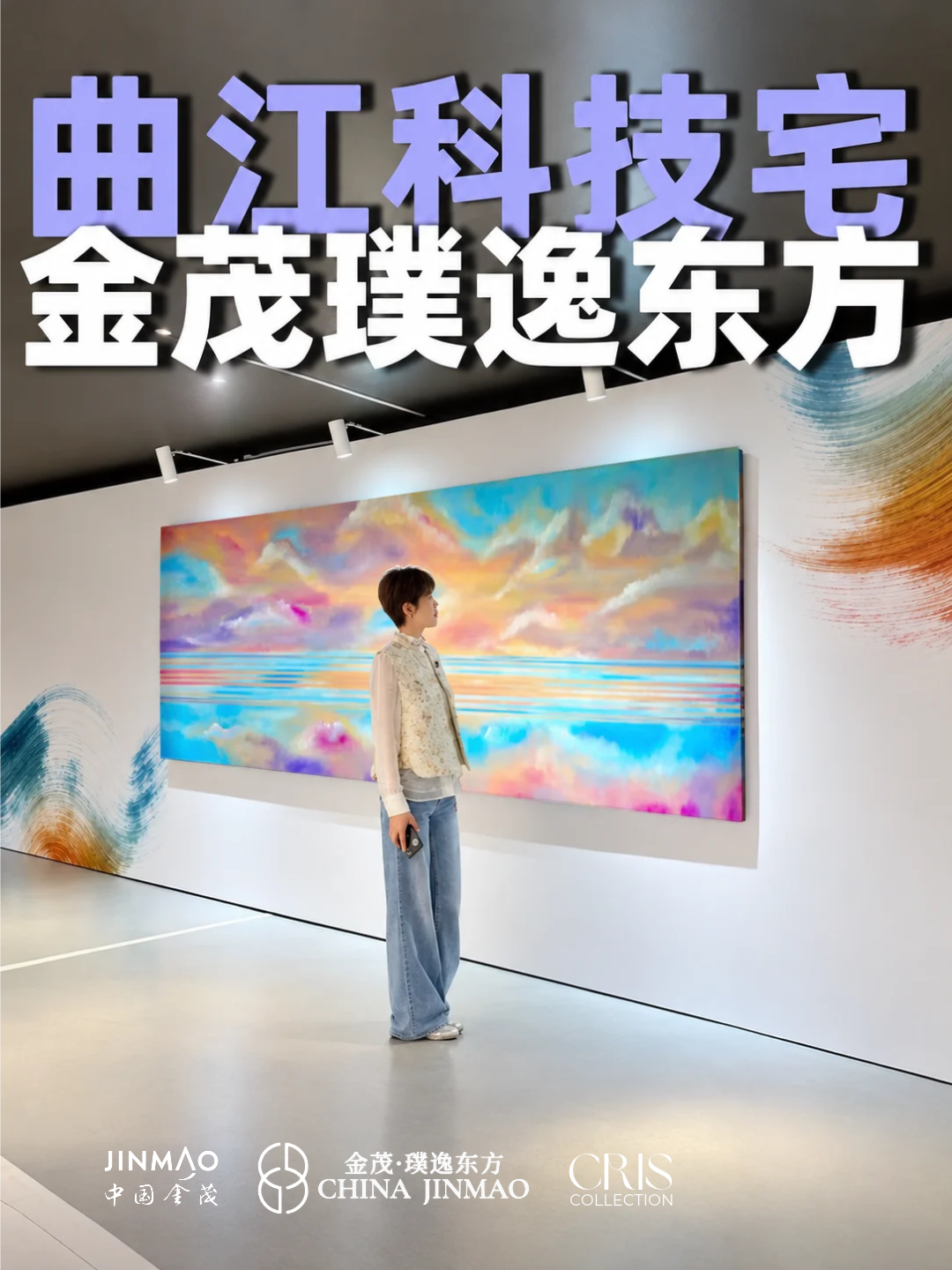
The convergence of contemporary artistic expression and high-engineering spatial developments is redefining the boundaries of corporate collections and transnational cultural heritage. A paradigmatic example of this phenomenon is the permanent integration of the monumental artworks from the ‘Beyond Time’ (拂尘·时逝) series—by the Argentine artist residing in Switzerland, Cris—into the architectural and identity fabric of Jinmao · Puyi Oriental (金茂·璞逸东方) in Xi’an, China. This collaboration, managed in alliance with the Liangbaolou Art Museum, establishes itself as a profound exercise in cultural diplomacy through the living space.
Art, geopolitics, and interculturality shape the global dynamics of the 21st century. In this context, this cooperation can be analyzed through three fundamental dimensions: architectural synthesis, the evolution of high-end corporate collecting, and the value of culture as a diplomatic bridge between West and East.
Architecture and Living Space: The Fourth-Generation Canvas
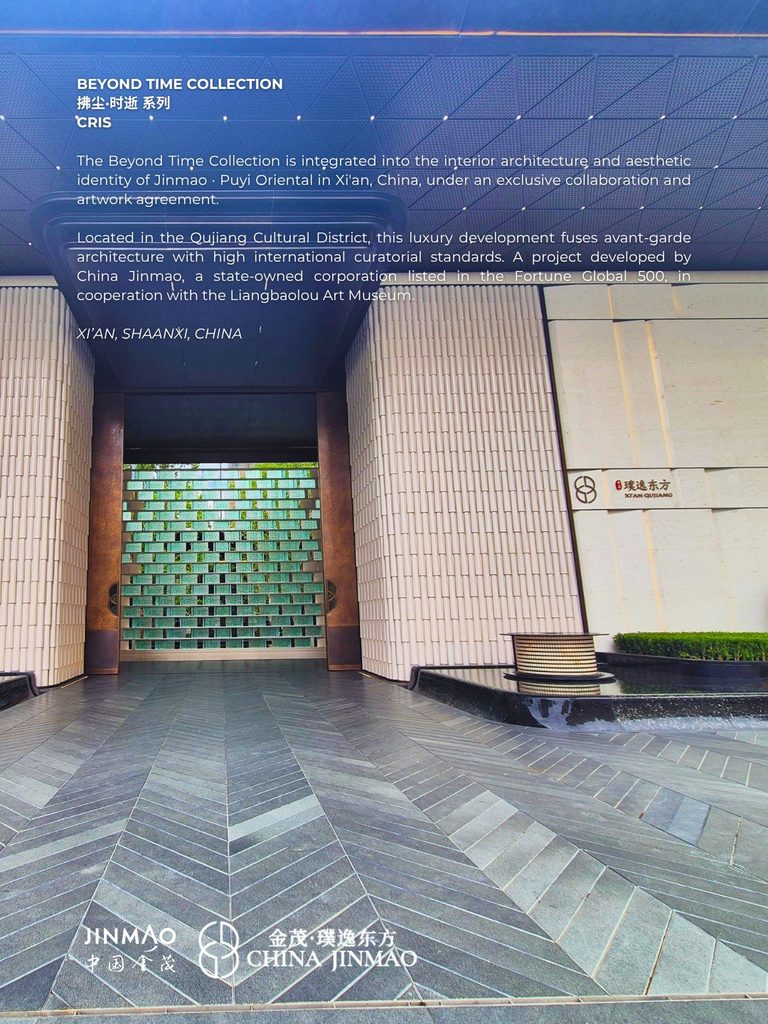
True to the principle that contemporary art must transcend the hermetic boundaries of traditional galleries and museums, the insertion of Cris’s monumental paintings into the Puyi Oriental luxury residential complex alters the experience of everyday space. Developed by the state-owned corporation China Jinmao, a leader in so-called “fourth-generation architecture” and premium green technologies, the complex does not conceive art as a superficial ornament, but rather as a structural element of its spatial narrative.
The chromatic palette, abstract horizons, and temporal lines of the ‘Beyond Time’ series engage in a direct dialogue with the invisible engineering of the building and ancestral Chinese philosophy. In an environment regulated by advanced technological systems—such as capillary thermal tube networks and a constant replacement of soundproofed oxygen—the large-format monumental paintings operate as anchors of contemplation. By being permanently situated in the VIP areas, design lobbies, and residential club lounges, the works mitigate the rigidity of concrete and technology, humanizing the space and turning the residents’ transit into an immersive aesthetic experience of profound introspection.
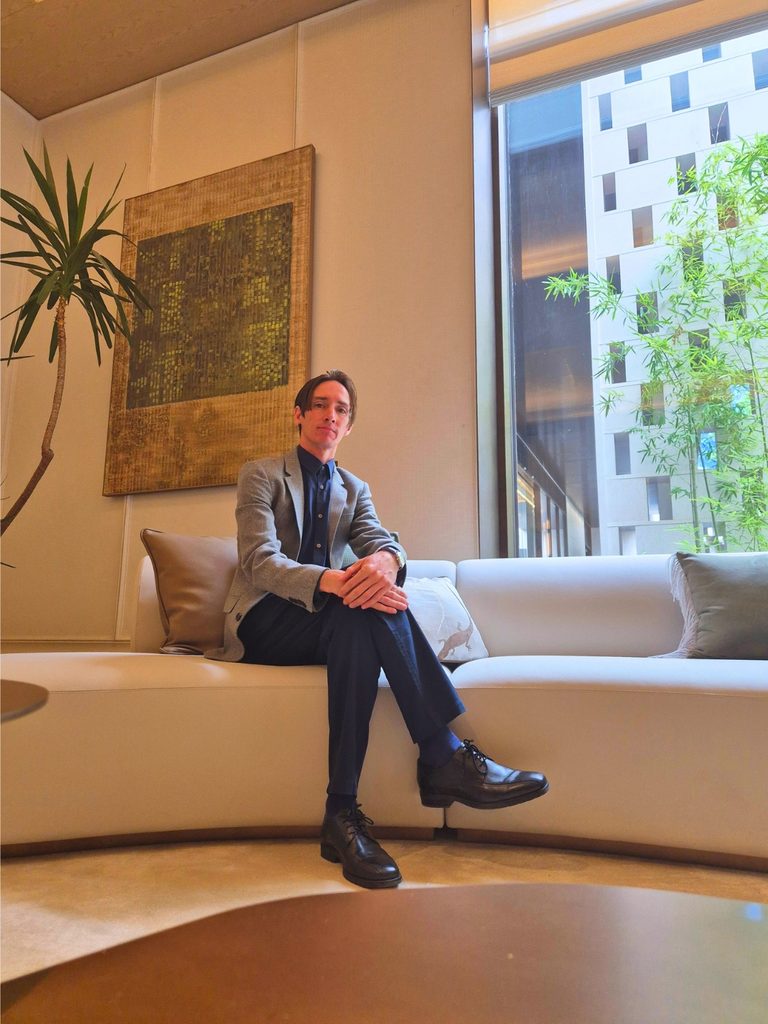
The Art Market: The Consolidation of High-End Corporate Patronage
The acquisition of multiple large-format works by Cris by a firm consolidated in the prestigious Fortune Global 500 list like China Jinmao evidences a significant transformation in international art market trends. Corporate collecting has evolved: it no longer solely seeks the accumulation of financial assets or portfolio diversification, but rather the co-creation of a brand value based on cultural capital and aesthetic exclusivity.
For luxury residential developments in highly sought-after districts like Qujiang, international avant-garde art has become the ultimate asset of distinction. By permanently integrating Cris’s pieces within the interior design and the identity of the project—alongside that of other local and international artists—the state-owned corporation elevates the property’s status to the category of institutional artistic heritage. This demonstrates that major Asian corporations are assuming a role as global patrons, validating large-scale Western abstract art as a universal language that speaks directly to high-net-worth audiences and major collectors in the region.
Cultural Diplomacy: A Dialogue of Civilizations at the Epicenter of the Silk Road
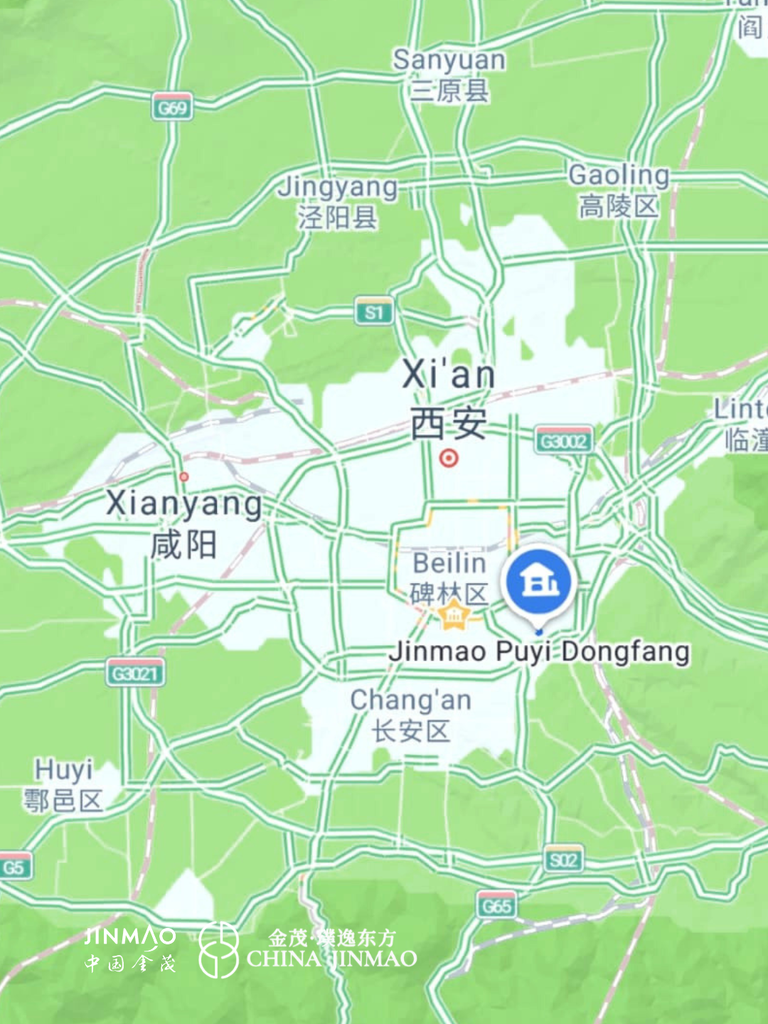
Xi’an is not a fortuitous location; ancient Chang’an and the cradle of the Tang Dynasty, the city represents the historical heart of exchanges between East and West through the ancestral Silk Road. In this context, the alliance between the Argentine artist, the Liangbaolou Art Museum, and China Jinmao transcends a commercial agreement to become a sophisticated channel for cultural diplomacy and intercultural understanding.
The interaction of civilizations and the role of culture in an accelerated 21st century demonstrate that art possesses the unique capacity to act as an architecture of peace and mutual understanding where politics often fragment. The ‘Beyond Time’ series, with its focus on timelessness, the blurred boundaries of the horizon, and light, meets the Eastern philosophy of Dao and the aesthetic concept of Yuan Ye (the return to a purified nature). Since July 2025, the company has developed permanent and seasonal exhibitions to share this intercultural dialogue with the public of the region. Puyi Dongfang & Qujiang Jinmao Palace presented Xi’an’s first underground garage art exhibition 2025, “Art Care” (Perspectivas del Arte), where the works of the artist Cris (克里斯) and the painter Huang Ling made a stunning appearance. This is also mirrored in the “Oriental Art Original” Exhibition, where the art of the Western creator converges with the expressions of consolidated local artists in a dialogue that enriches and expands.
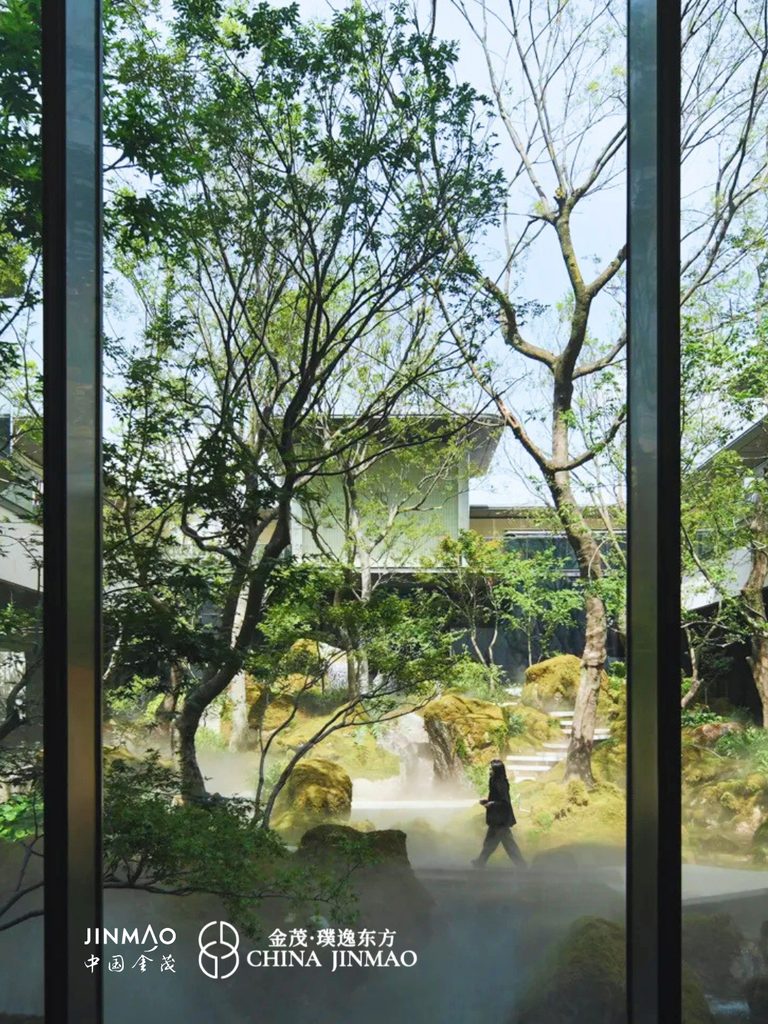
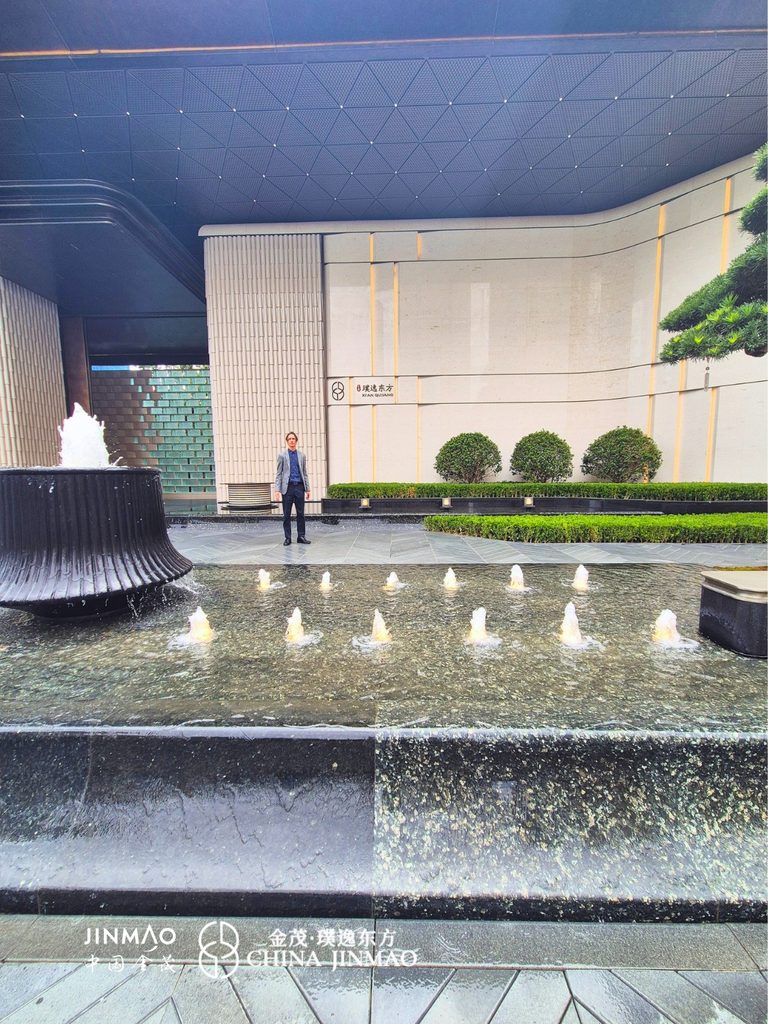
By being permanently exhibited and preserved within the institutional and residential spaces of Xi’an, Cris’s work materializes a contemporary bridge between European conceptual tradition and Chinese spatial sensibility, demonstrating that when art establishes itself definitively at the heart of another culture, it transforms into a living testimony of international cooperation and mutual respect among nations.
References
- Anholt, S. (2007). Competitive identity: The new brand management for nations, cities and regions. Palgrave Macmillan. [Enfoque sobre diplomacia cultural y marcas país].
- Bourdieu, P. (1993). The field of cultural production: Essays on art and literature. Columbia University Press. [Análisis sobre el valor y capital cultural en el mercado del arte].
- China Jinmao Holdings Group Limited. (2026). Corporate Profile, Real Estate Brand Architecture & Premium “Puyi” (璞系) Series Standards. www.chinajinmao.cn
- China Jinmao Investor Relations. (2026). Global Framework, ESG Standards, and Institutional Shareholding. www.chinajinmao.cn/zgjmen/index.html
- Frampton, K. (1983). Towards a critical regionalism: Six points for an architecture of resistance. In H. Foster (Ed.), The Anti-Aesthetic: Essays on Postmodern Culture (pp. 16-30). Bay Press. [Teoría sobre la fusión de la arquitectura vanguardista moderna con la sensibilidad local y regional].
- Graw, I. (2010). High price: Art between the market and celebrity culture. Sternberg Press. [Estudio sobre las dinámicas del mercado de alta gama y el coleccionismo contemporáneo].
- Jinmao Xi’an Regional Division. (2025). Architectural Manifesto, Spatial Engineering, and Technical Framework for Jinmao · Puyi Oriental (金茂·璞逸东方). Qujiang Cultural District Records.
- Liangbaolou Art Museum (亮宝楼艺术博物馆). (2025). Curatorial Dossier, Joint Ventures, and Fine Art Permanent Collection Records for “Art Care” (藝術 关照) & “Oriental Art Original” Exhibitions. Xi’an, Shaanxi, China.
- Nye, J. S. (2004). Soft power: The means to success in world politics. PublicAffairs. [Teoría fundacional de la diplomacia cultural y el poder blando en las relaciones transnacionales].
- Sohu Cultural & Real Estate Network. (2025). Branding Pack, Media Kits, and Visual Catalogues for the Jinmao Puyi Series. sohu.com
- Wu, C. (2003). Privatising culture: Corporate art intervention since the 1980s. Verso. [Análisis crítico sobre la evolución del mecenazgo y el coleccionismo corporativo a nivel institucional].
AI Tools and Sources:
- GOOGLE Search
- Chat GPT
- Claude AI
- DeepSeek